

Feb . 25, 2026 01:45 Back to list
Comprehensive Guide to the Typhoid Strip Test for Rapid Disease Detection
Understanding the Typhoid Strip Test: A Comprehensive Guide
The typhoid strip test is a rapid diagnostic tool crucial for the detection of Salmonella Typhi, the bacterium causing typhoid fever. Early and accurate diagnosis is vital for effective treatment and controlling the spread of this potentially life-threatening disease. This article will cover the principles behind the test, its benefits, procedure, interpretation of results, and the role PriseBio plays in providing reliable and accessible diagnostic solutions. Timely detection is paramount in resource-limited settings where access to comprehensive laboratory facilities may be challenging.
How Does the Typhoid Strip Test Work?
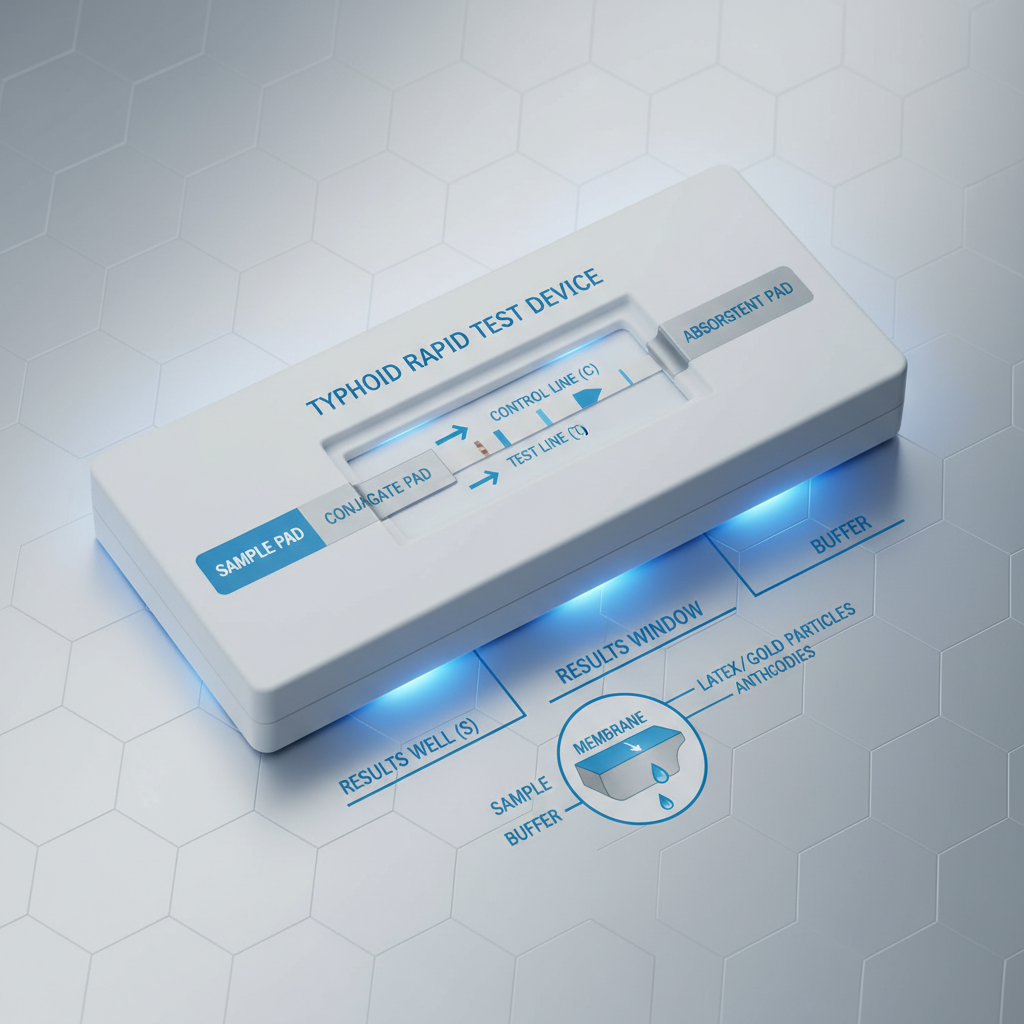
The typhoid strip test is an immunochromatographic assay (ICA). It functions by detecting specific antigens associated with Salmonella Typhi present in a patient’s blood sample. The test strip contains antibodies that are designed to bind to these antigens. When a blood sample is applied, it migrates along the strip. If the antigens are present, they bind to the antibodies, creating a visible line on the test strip. This principle provides a relatively simple and quick method for typhoid fever diagnosis, avoiding the need for complex laboratory procedures and specialized equipment.
Key Highlights: The test utilizes immunochromatography to detect Salmonella Typhi antigens, providing a rapid and convenient diagnostic method.
Typhoid Strip Test vs. Traditional Diagnostic Methods
Traditionally, typhoid fever diagnosis relied on blood cultures, Widal tests, and stool cultures. Blood cultures, while highly specific, can be slow and may yield false negatives, especially in the early stages of infection. The Widal test, while faster, suffers from lower sensitivity and specificity, leading to potential false positives. Stool cultures can be unreliable due to intermittent shedding of the bacteria. The typhoid strip test offers a significant advantage with its speed, ease of use, and improved accuracy compared to the Widal test. It’s particularly valuable in settings where rapid results are critical for initiating appropriate treatment.
Comparative Advantages:
• Speed: Results available within minutes.
• Ease of Use: Requires minimal training and equipment.
• Accuracy: Improved specificity compared to the Widal test.
• Accessibility: Suitable for use in resource-limited settings.
The Procedure: Performing the Typhoid Strip Test
The procedure for performing the typhoid strip test is straightforward. Typically, a small blood sample (often a finger prick) is collected and added to the sample buffer provided in the test kit. This mixture is then applied to the sample well on the test strip. After a specified incubation period (usually 15-20 minutes), the results are visually interpreted by observing the presence or absence of colored lines. Proper adherence to the manufacturer’s instructions, as provided by PriseBio, is crucial for accurate results.
Interpreting the Results: Understanding the Test Lines
The typhoid strip test typically displays three lines: a control line (C), a test line (T), and sometimes a background line. A positive result is indicated by the presence of both the control line and the test line, regardless of the intensity of the test line. The control line confirms the validity of the test. If only the control line appears, the result is negative, indicating the absence of Salmonella Typhi antigens. If no lines appear, the test is invalid and should be repeated. It's important to note that a positive result should be confirmed with other diagnostic methods, like blood culture, if feasible.
PriseBio: Your Partner in Reliable Diagnostics
PriseBio is committed to providing high-quality, affordable diagnostic solutions, including the typhoid strip test. We adhere to stringent quality control standards to ensure the accuracy and reliability of our products. Our commitment extends to providing excellent customer support and readily available information to healthcare professionals. We strive to contribute to improved patient outcomes through timely and accurate diagnosis.
Conclusion: Empowering Rapid Diagnosis with PriseBio
The typhoid strip test, backed by PriseBio’s dedication to quality, represents a significant advancement in the fight against typhoid fever. Its speed, simplicity, and improved accuracy make it an invaluable tool for healthcare providers worldwide. Investing in reliable diagnostic solutions like this is crucial for protecting public health and improving patient care.
Frequently Asked Questions (FAQs)
What is the sensitivity and specificity of the PriseBio Typhoid Strip Test?
The PriseBio Typhoid Strip Test boasts a high sensitivity of over 90% and a specificity exceeding 95% in clinical evaluations. Sensitivity refers to the test's ability to correctly identify individuals with typhoid fever, while specificity represents its ability to correctly identify those without the infection. These figures indicate a very low rate of false-negative and false-positive results, making it a reliable diagnostic tool. It’s important to note that these values can vary slightly depending on the population studied and the stage of infection.
How should the Typhoid Strip Test be stored?
To maintain the accuracy and reliability of the PriseBio Typhoid Strip Test, it should be stored in a cool, dry place, protected from direct sunlight and humidity. The ideal storage temperature is between 2°C and 30°C (36°F and 86°F). Do not freeze the test kit. Ensure the test kit is sealed tightly after use to prevent moisture absorption. Following these storage guidelines will help ensure optimal performance and accurate results.
Can the Typhoid Strip Test be used on children?
Yes, the PriseBio Typhoid Strip Test can be used on children. However, blood collection from children should be performed by trained healthcare professionals using appropriate pediatric techniques to minimize discomfort and ensure accurate sample collection. The interpretation of results remains the same for both adults and children. It’s crucial to consult a pediatrician for diagnosis and treatment of typhoid fever in children.
What are the limitations of the Typhoid Strip Test?
While the PriseBio Typhoid Strip Test offers several advantages, it's important to be aware of its limitations. It is a qualitative test, meaning it only indicates the presence or absence of the antigen, not the quantity. False-negative results may occur in the very early stages of infection when antigen levels are low or in individuals who have recently been treated with antibiotics. Confirmation with a blood culture, when possible, is recommended for definitive diagnosis.
-
Buy at home covid test rapid covid test kit antigen test covid19
NewsApr.16,2026
-
Covid19 Antigent Test Kit Cassette Covid Test Rapid Diagnostic Covid 19 Antigen Rapid Test
NewsApr.09,2026
-
Comprehensive Guide to Antigen Covid Test Covid Saliva Test and Covid Test Kit 19 Options
NewsApr.07,2026
-
Comprehensive Guide to Test Kit Covid Covid19 Rapid Antigen Test Self Test Covid Options
NewsApr.04,2026
-
Comprehensive Guide to Rapid Test Kits COVID19 for Accurate Covid Self Test Results
NewsMar.31,2026
-
Comprehensive Guide to Rapid Antigen Test Kit Covid 19 Covid Rapid Test Kit Test Kit Covid 19
NewsMar.28,2026