

Feb . 24, 2026 10:50 Back to list
Prisesbio Typhoid IGG IgM Rapid Test For Accurate Disease Detection
Understanding the Typhoid IGG IgM Rapid Test: A Comprehensive Guide
Typhoid fever remains a significant global health concern, particularly in regions with limited access to sanitation and clean water. Early and accurate diagnosis is crucial for effective treatment and preventing outbreaks. The Typhoid IGG IgM Rapid Test offered by Prisesbio provides a quick, convenient, and reliable method for detecting typhoid infection. This article will delve into the principles, benefits, interpretation, and limitations of this test, equipping you with the knowledge to understand its role in typhoid diagnosis. Rapid detection is key in controlling the spread of this potentially life-threatening disease.

How Does the Typhoid IGG IgM Rapid Test Work?
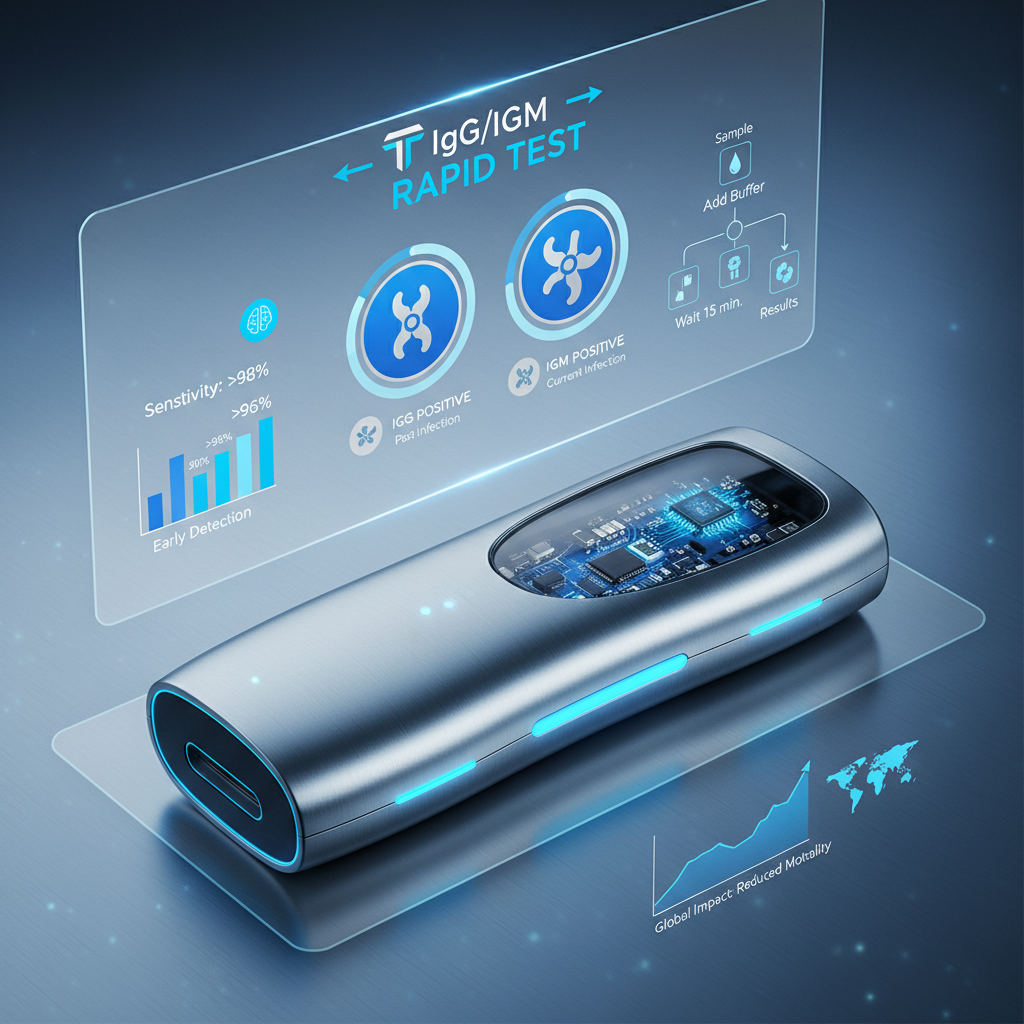
The Typhoid IGG IgM Rapid Test is an immunochromatographic assay designed to detect both IgM and IgG antibodies produced by the body in response to a Salmonella Typhi infection. The test utilizes a small sample – typically serum, plasma, or whole blood – applied to a test strip. If antibodies specific to typhoid fever are present, they will bind to colored particles on the strip, creating a visible line. The test distinguishes between IgM and IgG, providing valuable information about the stage of infection. IgM antibodies appear early in the infection, indicating a recent or acute infection. IgG antibodies develop later and persist for a longer period, suggesting past exposure or chronic infection.
Key Highlights: Detects both IgM and IgG antibodies for comprehensive analysis, provides results within 15-20 minutes, requires minimal training for operation.
Understanding IgM and IgG Antibodies in Typhoid Diagnosis
The differentiation between IgM and IgG antibodies is crucial for accurate diagnosis. An IgM positive result, coupled with a negative IgG result, strongly suggests a recent, acute typhoid infection. A positive IgG result, with or without IgM, could indicate past infection, chronic carriage, or even recent vaccination. Interpreting these results in conjunction with clinical symptoms and other laboratory findings is essential for a definitive diagnosis. The Prisesbio rapid test streamlines this process, providing clear visual results.
Antibody Interpretation:
• IgM Positive, IgG Negative: Recent/Acute Infection
• IgM Negative, IgG Positive: Past Infection/Vaccination
• IgM and IgG Positive: Possible recent infection with developing immunity, or chronic carrier
Typhoid IGG IgM Rapid Test vs. Traditional Diagnostic Methods
Traditional methods for diagnosing typhoid fever, such as blood cultures and the Widal test, can be time-consuming and lack sensitivity, particularly in the early stages of infection. Blood cultures require specialized laboratory equipment and can take several days to yield results. The Widal test, while widely available, suffers from issues with false-positive and false-negative results due to cross-reactivity and varying antibody responses. The Prisesbio rapid test offers a significant advantage by providing results within 15-20 minutes, making it ideal for point-of-care testing and rapid triage.
Prisesbio Typhoid IGG IgM Rapid Test: Product Specifications
The Prisesbio Typhoid IGG IgM Rapid Test is designed for ease of use and reliable performance. Here’s a detailed overview of the product specifications:
Conclusion: Empowering Rapid Typhoid Diagnosis
The Prisesbio Typhoid IGG IgM Rapid Test represents a significant advancement in typhoid fever diagnosis. Its speed, accuracy, and ease of use make it an invaluable tool for healthcare professionals in resource-limited settings and for rapid triage in clinical laboratories. By enabling early detection and appropriate treatment, this test plays a critical role in controlling the spread of typhoid fever and improving patient outcomes.
Frequently Asked Questions (FAQs)
What are the limitations of the Typhoid IGG IgM Rapid Test?
While the rapid test is a valuable diagnostic tool, it's important to acknowledge its limitations. False-positive results can occur due to cross-reactivity with other antibodies. False-negative results may occur in the very early stages of infection before sufficient antibodies have developed, or in individuals with weakened immune systems. It's crucial to interpret the results in conjunction with clinical signs and symptoms, travel history, and other laboratory findings. Confirmation with a blood culture is recommended in cases of diagnostic uncertainty. The test is intended for initial screening and should not be the sole basis for clinical decision-making.
How should I store the Typhoid IGG IgM Rapid Test?
The Prisesbio rapid test should be stored at 2-30°C (36-86°F) in a dry place, away from direct sunlight and moisture. Do not freeze the test kit. Ensure the test kit is within its expiration date before use. Proper storage is crucial to maintain the accuracy and reliability of the test results. Always refer to the package insert for specific storage instructions.
Can this test differentiate between different strains of Salmonella Typhi?
No, the Typhoid IGG IgM Rapid Test detects antibodies against common antigens present in most Salmonella Typhi strains. It does not differentiate between specific strains. While identifying the strain isn't always necessary for initial treatment, it can be important for epidemiological studies and tracking outbreaks. Further laboratory testing, such as whole-genome sequencing, is required for strain identification.
What training is required to perform this test?
The Prisesbio Typhoid IGG IgM Rapid Test is designed to be user-friendly and requires minimal training. However, it's essential for personnel performing the test to read and understand the complete instructions for use provided in the package insert. Following the proper procedures ensures accurate results. Basic laboratory safety practices should also be followed.
-
Buy at home covid test rapid covid test kit antigen test covid19
NewsApr.16,2026
-
Covid19 Antigent Test Kit Cassette Covid Test Rapid Diagnostic Covid 19 Antigen Rapid Test
NewsApr.09,2026
-
Comprehensive Guide to Antigen Covid Test Covid Saliva Test and Covid Test Kit 19 Options
NewsApr.07,2026
-
Comprehensive Guide to Test Kit Covid Covid19 Rapid Antigen Test Self Test Covid Options
NewsApr.04,2026
-
Comprehensive Guide to Rapid Test Kits COVID19 for Accurate Covid Self Test Results
NewsMar.31,2026
-
Comprehensive Guide to Rapid Antigen Test Kit Covid 19 Covid Rapid Test Kit Test Kit Covid 19
NewsMar.28,2026