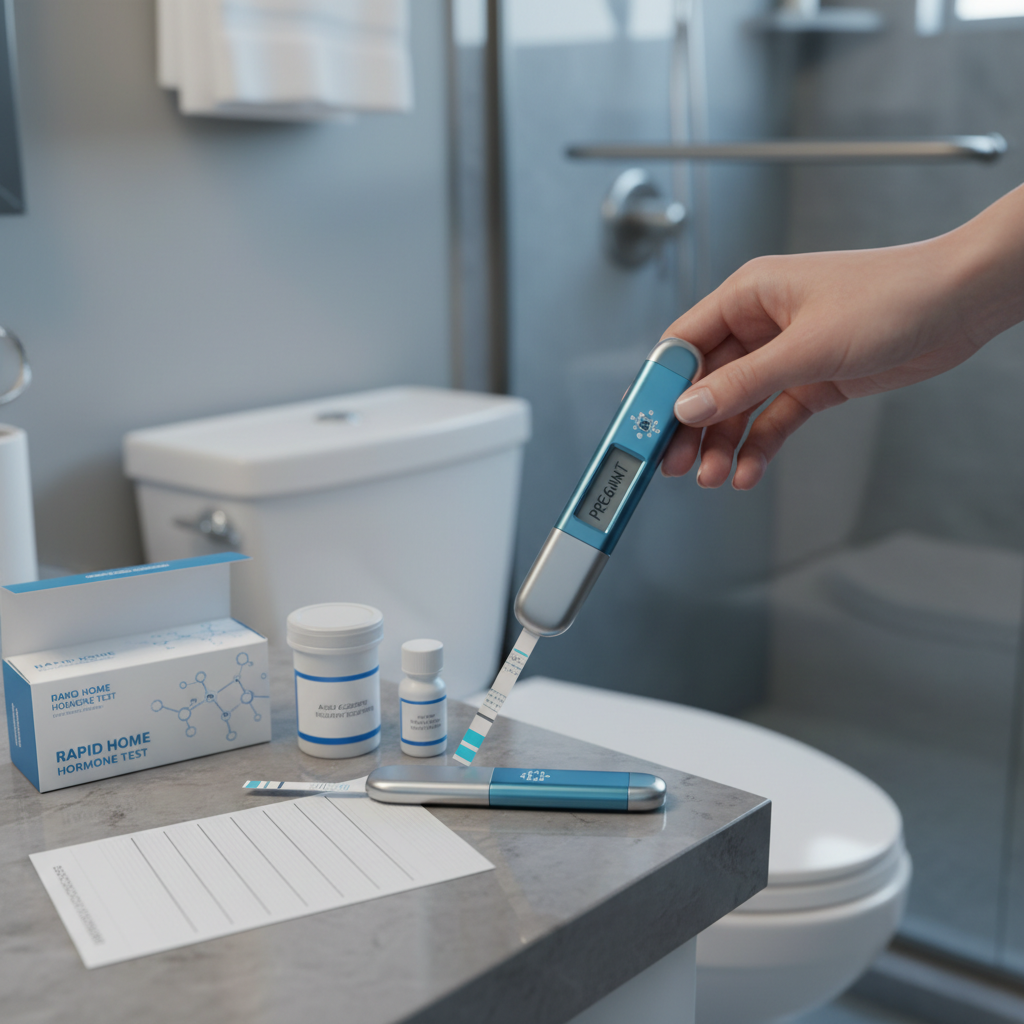
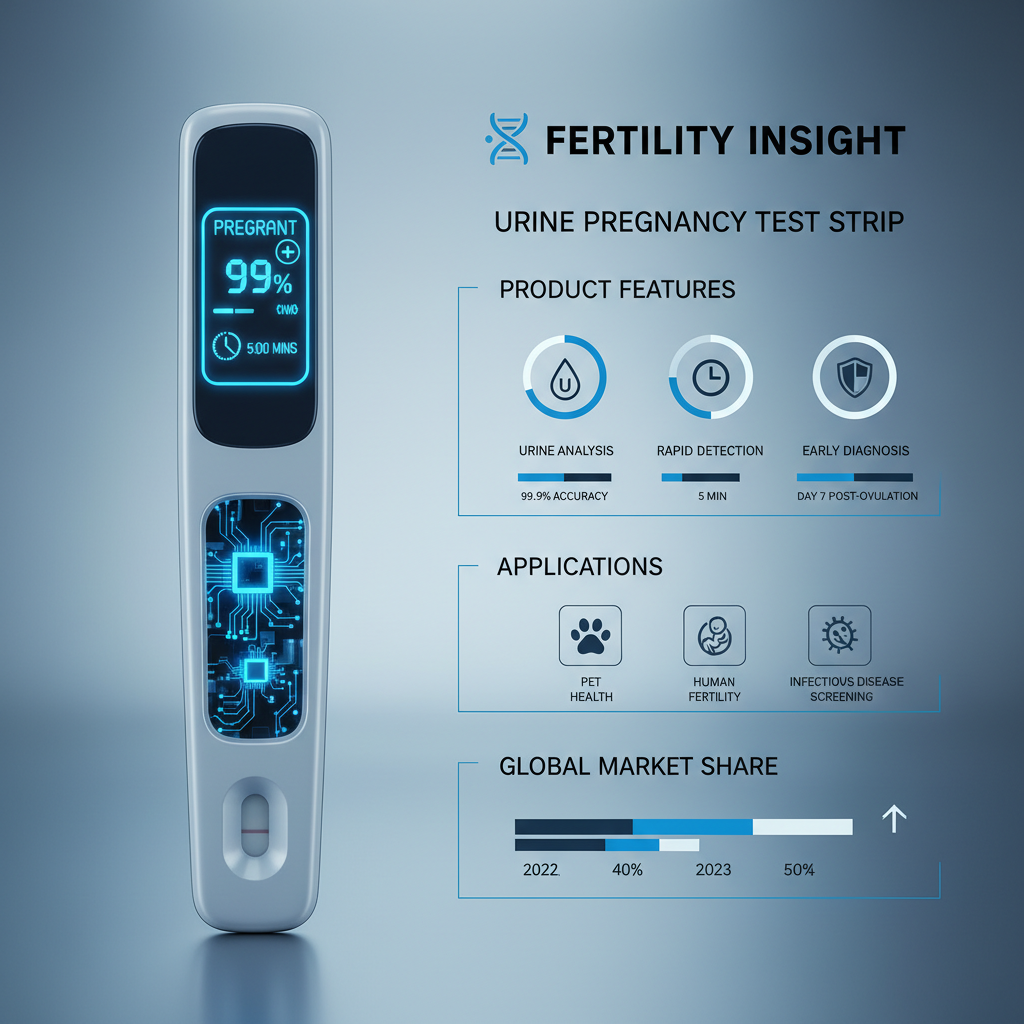
The humble urine pregnancy test strip represents a cornerstone of accessible healthcare, empowering individuals with crucial information about their reproductive health. Globally, these strips are vital, particularly in areas with limited access to clinical facilities. They offer a cost-effective, private, and rapidly deployable method for early pregnancy detection, contributing significantly to prenatal care and family planning. Understanding the nuances of this seemingly simple technology is paramount to ensuring its continued effectiveness and expanding its positive impact on global health outcomes.
Within the medical device industry, the urine pregnancy test strip exemplifies a successful application of lateral flow assay technology. The demand for these tests is consistently high, driven by factors ranging from increased awareness of reproductive health to the need for confidential self-diagnosis. Manufacturers are continually innovating to improve sensitivity, specificity, and user-friendliness, leading to more reliable and accessible testing solutions. The consistent demand necessitates robust production, quality control, and distribution networks.
The utility of a urine pregnancy test strip extends far beyond individual healthcare. Public health organizations utilize them in widespread screening programs, while aid agencies deploy them in humanitarian crises to monitor the health of vulnerable populations. The simplicity and affordability of the test make it an invaluable tool in resource-constrained settings, enabling early identification of pregnant women and facilitating timely access to essential healthcare services.
The Global Impact of urine pregnancy test strip
The urine pregnancy test strip is a globally recognized and utilized diagnostic tool. According to the World Health Organization, approximately 830 women die every day from preventable causes related to pregnancy and childbirth, highlighting the critical need for early detection and access to prenatal care. These tests play a vital role in facilitating this access, particularly in developing countries where access to healthcare infrastructure is limited. The accessibility and affordability make them an indispensable component of reproductive health programs worldwide.
The market for pregnancy tests, predominantly comprising urine pregnancy test strips, is estimated to be worth billions of dollars annually, demonstrating consistent global demand. Factors such as increasing awareness regarding family planning, rising disposable incomes, and the convenience offered by self-testing contribute to this sustained growth. The availability of these tests also influences public health initiatives aimed at reducing unintended pregnancies and improving maternal health outcomes.
Defining the urine pregnancy test strip
A urine pregnancy test strip is a diagnostic device designed to detect the presence of human chorionic gonadotropin (hCG) in urine. hCG is a hormone produced during pregnancy, making its detection a reliable indicator of gestation. The test utilizes a lateral flow immunoassay, where urine migrates along a strip containing antibodies specific to hCG. A visible line appears if hCG is present, indicating a positive result.
These tests are a direct application of advancements in immunochemistry and microfluidics. Their simplicity, portability, and rapid results make them ideal for point-of-care testing, meaning they can be used directly by individuals in their homes or in settings without sophisticated laboratory equipment. This accessibility contrasts sharply with older methods of pregnancy confirmation that required a visit to a healthcare professional and laboratory analysis.
In modern humanitarian contexts, the urine pregnancy test strip is a crucial tool in disaster relief and refugee camps. It enables healthcare providers to quickly identify pregnant women among vulnerable populations, allowing for the provision of essential prenatal care and monitoring of maternal health, even in challenging logistical circumstances.
Core Components and Functionality
The functionality of a urine pregnancy test strip relies on several key components. These include a sample pad that absorbs the urine, a conjugate pad containing hCG antibodies conjugated to a visual marker (typically colloidal gold), a test line containing immobilized hCG antibodies, and a control line to confirm the test is working correctly. The lateral flow principle dictates that hCG in the urine binds to the antibodies, creating a visible band.
Sensitivity is a critical factor; a highly sensitive urine pregnancy test strip can detect even very low concentrations of hCG, enabling earlier detection of pregnancy. Specificity is equally important, ensuring the test doesn’t produce false positives due to other substances in the urine. The quality of the antibodies, the flow rate of the urine across the strip, and the overall manufacturing process all contribute to these key performance characteristics.
Another crucial component is the control line. This line confirms that the test has worked correctly, regardless of the presence or absence of hCG. If the control line doesn't appear, the test is invalid and must be repeated. The presence of a control line provides assurance of the test’s functionality and reliability, safeguarding against inaccurate readings.
Applications Across Diverse Sectors
The primary application of the urine pregnancy test strip lies within the individual healthcare sector, empowering women to confirm pregnancy in the privacy of their homes. However, its utility extends far beyond personal use. Clinics and healthcare providers utilize these tests as a rapid, preliminary diagnostic tool, streamlining patient assessment and confirming test results.
In veterinary medicine, similar tests – adapted to detect pregnancy-specific hormones in animal urine – are used for livestock breeding management and pet care. These applications highlight the versatility of the lateral flow assay technology underpinning the urine pregnancy test strip.
Comparison of urine pregnancy test strip Methods
Advantages and Long-Term Value Proposition
The significant advantages of the urine pregnancy test strip include its affordability, accessibility, and speed. Compared to laboratory-based testing, these strips offer a cost-effective and convenient alternative, particularly in resource-limited settings. The rapid results allow for timely decision-making and access to appropriate healthcare.
From a long-term perspective, widespread use of these tests contributes to improved maternal health outcomes by facilitating early prenatal care. The ability to confirm pregnancy quickly empowers women to make informed choices about their health and reproductive future. This ultimately fosters healthier families and communities.
Future Trends and Emerging Innovations
Future developments in urine pregnancy test strip technology are focused on improving sensitivity, specificity, and user experience. Researchers are exploring the use of nanomaterials to enhance signal amplification and reduce false-negative rates. Digital readouts, connected via smartphone apps, are also being developed to provide more accurate and convenient results.
The integration of artificial intelligence (AI) for image analysis and result interpretation is another emerging trend. AI-powered systems could potentially eliminate subjective reading of the test line, further enhancing accuracy and reducing errors. Furthermore, combining these tests with telemedicine platforms could provide remote access to healthcare professionals for counseling and support.
Sustainability is also becoming a key focus, with manufacturers exploring biodegradable materials and eco-friendly packaging to minimize the environmental impact of these products.
Challenges and Mitigation Strategies
Despite their widespread use, urine pregnancy test strips are not without limitations. False-negative results can occur if the test is taken too early in pregnancy or if the urine is diluted. False-positive results, while less common, can be caused by certain medical conditions or medications. Proper quality control and adherence to manufacturer’s instructions are crucial for minimizing these errors.
Ensuring equitable access remains a challenge in many parts of the world. Affordability can be a barrier for low-income populations, and limited access to healthcare infrastructure can hinder their use. Public health initiatives and subsidies can help to address these disparities and ensure that everyone has access to this essential diagnostic tool.
Another challenge is the disposal of used test strips. Developing environmentally friendly disposal methods, such as biodegradable strips or recycling programs, is essential for minimizing environmental impact.
Summary of Challenges & Mitigation for urine pregnancy test strip
| Challenge Area |
Specific Issue |
Impact Level (1-10) |
Mitigation Strategy |
| Accuracy |
False Negative Results |
7 |
Improved antibody sensitivity; user education on testing timing. |
| Accuracy |
False Positive Results |
4 |
Enhanced specificity of antibodies; consideration of medication interference. |
| Accessibility |
Cost Barrier |
8 |
Subsidies, bulk purchasing programs, affordable alternatives. |
| Accessibility |
Limited Infrastructure |
9 |
Distribution networks to remote areas; mobile health clinics. |
| Sustainability |
Waste Disposal |
6 |
Biodegradable materials; recycling programs; responsible disposal guidelines. |
| User Error |
Incorrect Test Procedure |
5 |
Clear, concise instructions; visual aids; user training. |
FAQS
Urine pregnancy test strips are generally highly accurate, with a sensitivity of over 99% when performed correctly after a missed period. However, testing too early can lead to false negatives. Results should always be confirmed with a healthcare professional, particularly if there is any doubt.
The most accurate results are obtained when the test is taken at least one day after a missed period. This is when hCG levels are typically high enough to be reliably detected. Taking the test first thing in the morning, when urine is most concentrated, can also improve accuracy.
Some medications, particularly those containing hCG (used for fertility treatments), can potentially cause a false-positive result. It's important to inform your healthcare provider about any medications you are taking before using a urine pregnancy test strip.
A faint line usually indicates a low level of hCG, which may mean you are very early in pregnancy. However, it can also be caused by testing too soon or diluted urine. It’s recommended to retest in a few days with a fresh sample to confirm the result.
Store the test strips in a cool, dry place, away from direct sunlight and moisture. Do not use a test strip past its expiration date, as it may not provide accurate results. Always follow the storage instructions provided on the packaging.
If you receive a negative result but continue to experience symptoms of pregnancy, such as missed period or nausea, it's best to consult with a healthcare professional. They can perform a more sensitive blood test to confirm or rule out pregnancy.
Conclusion
The urine pregnancy test strip represents a remarkable example of accessible healthcare technology. From its fundamental role in individual reproductive health management to its broader applications in public health and humanitarian aid, it has profoundly impacted global wellbeing. Its affordability, ease of use, and rapid results make it an indispensable tool for empowering individuals and improving health outcomes worldwide.
Looking ahead, continued innovation in test sensitivity, user experience, and sustainable manufacturing will further enhance the value of the urine pregnancy test strip. By addressing current challenges and embracing emerging technologies, we can ensure that this essential diagnostic tool continues to play a critical role in advancing global health and reproductive equity. Visit our website at www.prisesbio.com to explore our range of products.