
Notícias
-
Comprehensive Guide to COVID Test Kits for Accurate and Reliable Results
In a world still navigating the complexities of COVID-19, rapid and reliable testing remains crucial. COVID test kits have become an essential tool for individuals and organizations, providing a convenient way to detect the virus. This article delves into the various types of kits available, their accuracy, usage, and the importance of choosing a reputable provider like PrisesBio. Understanding these kits empowers informed decisions about health and safety. There are primarily two types of COVID-19 tests available for home use: rapid antigen tests and PCR (polymerase chain reaction) tests. Rapid antigen tests are quick, providing results in 15-30 minutes, but they are generally less sensitive than PCR tests. PCR tests are considered the “gold standard” for accuracy, but require sending samples to a lab, resulting in longer turnaround times. Some at-home PCR kits are available, simplifying the process. Choosing the right test depends on your needs – rapid testing for quick results or highly accurate testing when sensitivity is paramount.Read more -
Understanding Ovulation LH Test Strips For Accurate Fertility Tracking
Trying to conceive can be an exciting, yet sometimes challenging, journey. Knowing when you’re ovulating is a crucial piece of the puzzle, and ovulation LH test strips offer a convenient and affordable way to pinpoint your most fertile days. This article will delve into how these strips work, how to interpret the results, and what factors can influence them. We will also explore how PrisesBio's ovulation tests can assist you in your journey to parenthood. Ovulation LH test strips detect the surge in Luteinizing Hormone (LH) that occurs 24-36 hours before ovulation. This surge triggers the release of an egg from the ovary. The strips contain antibodies that react with LH in your urine. When a sufficient amount of LH is present, a test line will appear, indicating the LH surge and your approaching ovulation. The intensity of the test line compared to the control line is key to interpreting the results. Using these tests consistently allows you to predict when to engage in intercourse for the best chance of conception. Reading an ovulation test is relatively straightforward. Each kit includes a control line, which indicates the test is working correctly, and a test line. Here's how to interpret the results: Negative Result: Only the control line appears. This means the LH surge hasn’t started yet.Read more -
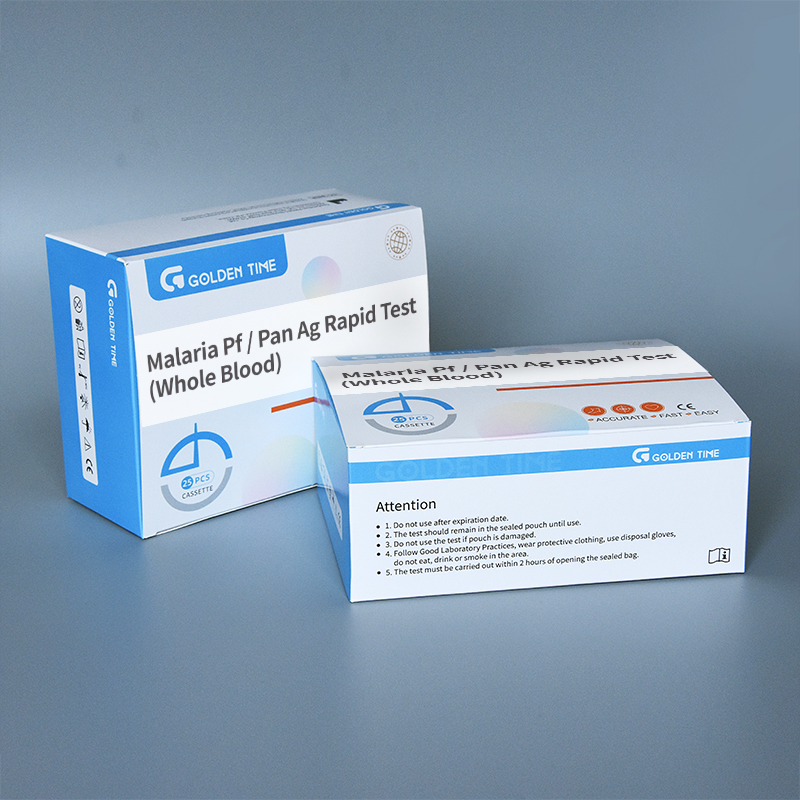
Comprehensive Guide to Rapid Diagnostic Test Malaria for Effective Healthcare Solutions
Malaria remains a significant global health challenge, particularly in tropical and subtropical regions. Early and accurate diagnosis is critical for effective treatment and control. Rapid diagnostic tests (RDTs) for malaria have revolutionized diagnosis, offering a quick and accessible alternative to traditional microscopy. This article will explore the principles, benefits, limitations, and future trends of RDTs, with a focus on providing a comprehensive understanding for healthcare professionals and those working in malaria-endemic areas. The advancements in malaria diagnostics are constantly evolving to meet the need for fast and accurate results. RDTs are immunochromatographic tests that detect specific malaria antigens, primarily from Plasmodium falciparum or Plasmodium vivax, in a blood sample. Typically, a drop of blood is collected (finger-prick or venous) and added to a test device containing antibodies specific to these antigens. If the antigens are present, they bind to the antibodies, forming a visible line on the test strip. Most RDTs detect histidine-rich protein 2 (HRP2), a protein specific to P. falciparum.Read more -
Choosing the Right Disposable Virus Sampling Tubes for Accurate Specimen Collection
Accurate and reliable virus detection begins with proper specimen collection. Disposable virus sampling tubes are critical components in this process, ensuring sample integrity and patient safety. At Primes Bio, we understand the importance of quality and consistency in diagnostic testing. This article will explore the key considerations when selecting disposable virus sampling tubes, their applications, benefits, and how Primes Bio provides reliable solutions for your laboratory needs. Effective specimen collection is the first step towards accurate diagnosis and timely treatment. Disposable virus sampling tubes are designed for single-use collection and transport of viral specimens, such as nasopharyngeal swabs, oropharyngeal swabs, and sputum samples. These tubes typically contain a specific transport medium formulated to preserve the viability of viruses during transit to the laboratory.Read more -
Comprehensive Guide to Uncut Sheet Rapid Tests for Efficient Diagnostics
In today's fast-paced world, rapid diagnostic testing is crucial for timely healthcare decisions. Uncut sheet rapid tests offer a cost-effective and efficient solution for mass screening and point-of-care testing. This article will delve into the benefits, applications, and key considerations when choosing uncut sheet rapid tests, particularly focusing on those available from Prisesbio. We'll cover everything from their construction to quality control, ensuring you have the information needed to make informed decisions. Unlike individually packaged rapid tests, uncut sheet rapid tests come in a matrix format – a single sheet containing multiple test strips. This design significantly reduces packaging materials and labor costs associated with individual wrapping, making them an economical choice for large-scale testing programs. The tests are designed for easy breakage and separation for convenient distribution. These tests are commonly used for infectious disease detection, pregnancy tests, and other point-of-care applications. Prisesbio specializes in providing high-quality uncut sheet rapid tests to meet various testing needs.Read more -
Exploring Rapid Test Uncut Sheets for Efficient and Cost Effective Testing
In the world of diagnostic testing, particularly in healthcare and research, efficiency and cost-effectiveness are paramount. Rapid test uncut sheets offer a compelling solution for high-volume testing needs. This article will delve into what rapid test uncut sheets are, their benefits, applications, and how Prises Bio can provide you with quality and reliable products. We’ll explore how these sheets streamline processes and reduce costs for testing facilities, researchers, and distributors. Rapid test uncut sheets consist of multiple individual rapid tests arranged on a single sheet of material. Instead of individually packaged tests, these sheets contain a matrix of test strips or devices. This format is designed for high-throughput manufacturing or on-site production of finished tests. The tests are typically die-cut or perforated for easy separation once the sheet is processed. These sheets are a cost-effective starting point for companies looking to produce and distribute their own branded rapid tests.Read more -
Understanding the HBsAg Test for Hepatitis B Diagnosis and Management
The HBsAg test, or Hepatitis B surface antigen test, is a crucial screening tool used to detect the presence of the Hepatitis B virus (HBV) in the blood. Early detection is key to managing HBV infection and preventing serious health complications. This article provides a detailed overview of the HBsAg test, its significance, interpretation of results, and related information. Understanding the nuances of this test is vital for individuals and healthcare professionals alike. Prisesbio offers comprehensive Hepatitis B testing services, providing accurate and reliable results. The HBsAg test identifies a specific protein on the surface of the Hepatitis B virus. A positive result indicates that the person is infected with HBV, either acutely or chronically. The test is important because Hepatitis B can lead to serious liver problems, including cirrhosis, liver failure, and liver cancer. Early diagnosis allows for prompt treatment and monitoring, reducing the risk of these complications. Regular screening is particularly important for individuals at high risk, such as those with multiple sexual partners, intravenous drug users, and healthcare workers.Read more -
Comprehensive Guide to the HCV Antibody Test and Hepatitis C Screening
The HCV antibody test is a crucial diagnostic tool used to detect the presence of antibodies to the Hepatitis C virus (HCV). This test is typically the first step in screening for Hepatitis C infection. It doesn't detect the virus itself, but rather the body's immune response to it. Understanding the process, its implications, and follow-up tests is vital for anyone concerned about potential exposure. This article will provide a thorough overview of the HCV antibody test, its significance, and what results mean, alongside resources available at PrisesBio. The HCV antibody test looks for antibodies – proteins produced by your immune system in response to an infection. These antibodies become detectable several weeks to months after initial infection. It's important to remember that a positive result doesn't necessarily mean you have an active Hepatitis C infection. It simply indicates you've been exposed to the virus at some point.Read more -
Comprehensive Guide to the AntiHCV Test and Hepatitis C Detection
The Anti-HCV test is a crucial diagnostic tool used to detect the presence of antibodies to the Hepatitis C virus (HCV). This test doesn't diagnose an active infection directly, but rather indicates whether an individual has been exposed to the virus and developed an immune response. Understanding the nuances of this test, its interpretation, and the follow-up procedures are essential for both healthcare professionals and individuals concerned about potential HCV exposure. Prisesbio offers comprehensive HCV testing services with rapid turnaround times and accurate results. Early detection and management are key to preventing chronic liver disease and other serious complications associated with Hepatitis C.Read more -
Comprehensive Guide to the Typhoid Strip Test for Rapid Disease Detection
The typhoid strip test is a rapid diagnostic tool crucial for the detection of Salmonella Typhi, the bacterium causing typhoid fever. Early and accurate diagnosis is vital for effective treatment and controlling the spread of this potentially life-threatening disease. This article will cover the principles behind the test, its benefits, procedure, interpretation of results, and the role PriseBio plays in providing reliable and accessible diagnostic solutions. Timely detection is paramount in resource-limited settings where access to comprehensive laboratory facilities may be challenging. The typhoid strip test is an immunochromatographic assay (ICA). It functions by detecting specific antigens associated with Salmonella Typhi present in a patient’s blood sample. The test strip contains antibodies that are designed to bind to these antigens. When a blood sample is applied, it migrates along the strip. If the antigens are present, they bind to the antibodies, creating a visible line on the test strip.Read more -
Prisesbio Typhoid IGG IgM Rapid Test For Accurate Disease Detection
Typhoid fever remains a significant global health concern, particularly in regions with limited access to sanitation and clean water. Early and accurate diagnosis is crucial for effective treatment and preventing outbreaks. The Typhoid IGG IgM Rapid Test offered by Prisesbio provides a quick, convenient, and reliable method for detecting typhoid infection. This article will delve into the principles, benefits, interpretation, and limitations of this test, equipping you with the knowledge to understand its role in typhoid diagnosis. Rapid detection is key in controlling the spread of this potentially life-threatening disease. The Typhoid IGG IgM Rapid Test is an immunochromatographic assay designed to detect both IgM and IgG antibodies produced by the body in response to a Salmonella Typhi infection. The test utilizes a small sample – typically serum, plasma, or whole blood – applied to a test strip. If antibodies specific to typhoid fever are present, they will bind to colored particles on the strip, creating a visible line.Read more -
Comprehensive Guide to the Typhoid Test Detection Accuracy and Prevention
The typhoid test is a crucial diagnostic tool used to identify Salmonella Typhi, the bacterium responsible for typhoid fever. This infectious disease, spread through contaminated food and water, remains a significant public health concern globally. Early and accurate diagnosis through a typhoid test is essential for effective treatment and preventing further spread. This article will comprehensively cover the various types of typhoid tests, their accuracy, when to get tested, and the role Prises Bio plays in providing reliable testing solutions. Understanding the nuances of typhoid testing is vital for both individuals and healthcare professionals. Several methods are used to detect typhoid fever, each with its advantages and limitations. The most common include the Widal test, the Typhidot test, and Polymerase Chain Reaction (PCR). The Widal test, a traditional serological test, detects antibodies against Salmonella Typhi. However, it has known limitations, including a relatively low sensitivity and specificity, especially in areas where typhoid fever is endemic. The Typhidot test, a rapid immunochromatographic test, detects antibodies in a finger prick of blood. PCR, considered the gold standard, directly detects the bacterial DNA and offers the highest accuracy.Read more