The global need for rapid and accurate disease detection has never been more critical, and the covid antigen test stands as a cornerstone in our response to infectious disease outbreaks. These tests have become invaluable tools for quickly identifying infections, enabling timely public health interventions, and mitigating the spread of viruses like SARS-CoV-2. Understanding the principles, applications, and future potential of covid antigen tests is paramount for healthcare professionals, policymakers, and the general public alike.
The widespread adoption of covid antigen tests has transformed diagnostic capabilities, offering a convenient and affordable alternative to more complex laboratory-based methods. Their ease of use and rapid turnaround time make them ideally suited for point-of-care testing, mass screening programs, and decentralized healthcare settings. This accessibility has been particularly crucial in resource-limited environments and for facilitating swift decision-making during public health emergencies.
The development and deployment of reliable covid antigen tests have played a critical role in managing the COVID-19 pandemic, allowing for effective contact tracing, isolation measures, and ultimately, a more informed and proactive approach to public health management. Their continued importance extends beyond COVID-19, offering a flexible platform for detecting a range of infectious agents and contributing to global health security.
The Fundamentals of covid antigen test
At its core, the covid antigen test is a diagnostic tool designed to detect the presence of specific viral proteins, known as antigens, associated with a viral infection. Unlike PCR tests which amplify viral genetic material, antigen tests directly identify these proteins, offering a quicker, though generally less sensitive, result. This makes them invaluable for rapid screening and early detection.
The simplicity of antigen tests is a key advantage. Many tests can be performed with minimal training and equipment, making them suitable for use in a wide range of settings, from clinics and hospitals to schools, workplaces, and even individual homes. This decentralized testing capability has significantly expanded access to diagnostics and improved public health responsiveness.
The Global Impact of covid antigen test
The COVID-19 pandemic highlighted the critical need for rapid and accessible diagnostic testing, and covid antigen tests rapidly rose to meet that demand. According to the World Health Organization (WHO), antigen tests have played a crucial role in expanding testing capacity, particularly in low- and middle-income countries where access to PCR testing is limited.
Globally, millions of antigen tests have been deployed, enabling governments and healthcare organizations to track infection rates, implement targeted interventions, and monitor the effectiveness of public health measures. This rapid diagnostic capability has been essential for controlling outbreaks and protecting vulnerable populations. The impact extends beyond immediate pandemic response, improving preparedness for future health crises.
The increased availability of covid antigen tests has also empowered individuals to take personal responsibility for their health, enabling them to quickly identify potential infections and take appropriate action to prevent further spread. This self-testing capability has been particularly valuable in reducing community transmission and protecting at-risk individuals.
Defining covid antigen test and its Relevance
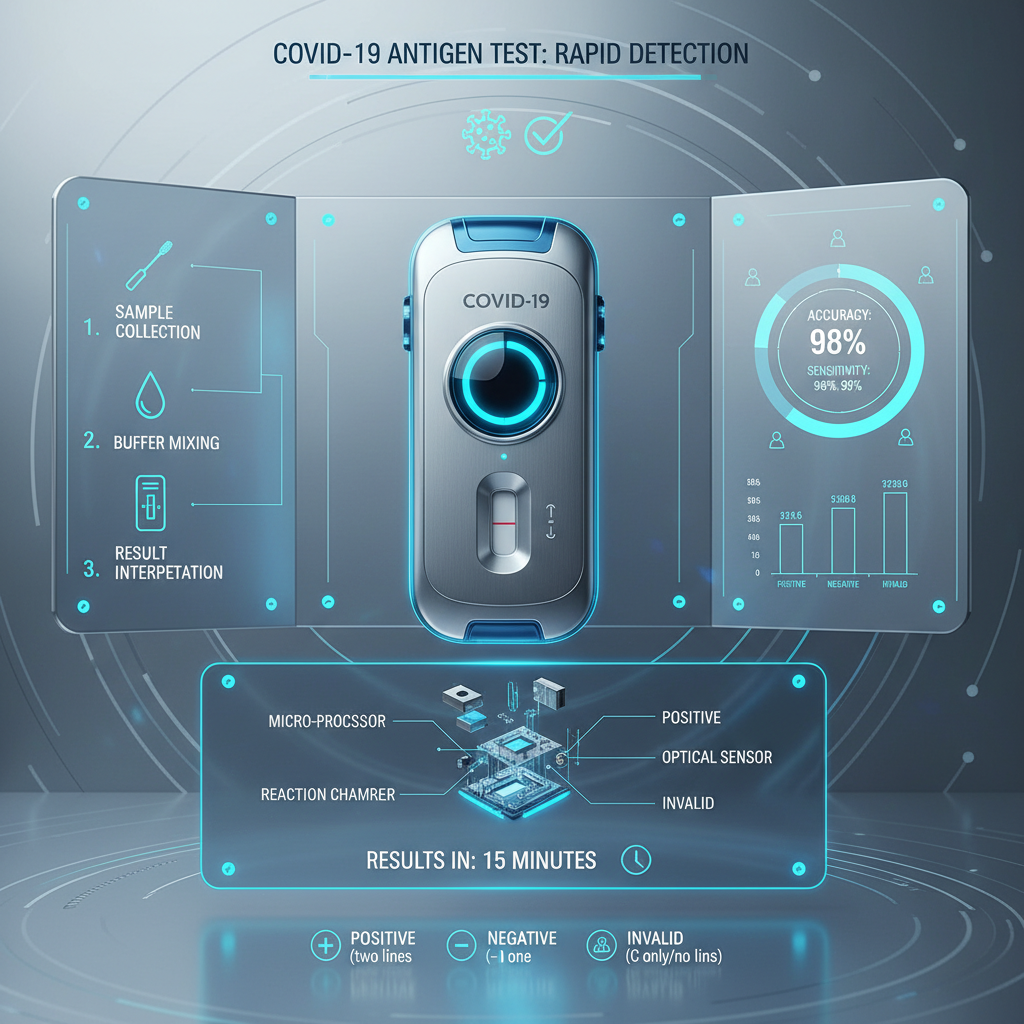
A covid antigen test is a point-of-care diagnostic test used to detect the presence of a specific protein – an antigen – from the virus that causes COVID-19. These tests are typically performed on a nasal or throat swab sample and provide results within 15-30 minutes, offering a rapid assessment of infectious status.
The relevance of antigen tests extends beyond simply confirming a diagnosis. They are particularly valuable for identifying individuals who are most infectious, as antigen levels tend to correlate with viral load during the acute phase of infection. This allows for targeted isolation measures and reduces the risk of further transmission.
In the context of modern healthcare, antigen tests represent a crucial bridge between laboratory-based diagnostics and real-time, decentralized monitoring. They are essential for managing outbreaks, protecting vulnerable populations, and enabling individuals to make informed decisions about their health and safety.
Key Aspects of covid antigen test Performance
Several key factors influence the performance of covid antigen tests, and understanding these aspects is vital for accurate interpretation of results. Sensitivity, the ability to correctly identify positive cases, and specificity, the ability to correctly identify negative cases, are crucial metrics.
Other important factors include the timing of the test relative to infection (tests are generally most accurate when performed during the peak of viral shedding), the quality of the sample collected, and adherence to the manufacturer’s instructions. Proper test execution is fundamental to ensure reliable results.
Comparison of Different covid antigen test Methods
Applications of covid antigen test Worldwide
The applications of covid antigen tests are incredibly diverse, ranging from large-scale public health screening programs to individual self-testing. In many countries, they are used extensively in schools and workplaces to quickly identify and isolate infected individuals, preventing further outbreaks.
In post-disaster relief operations, where access to laboratory facilities is often limited, antigen tests provide a crucial diagnostic tool for identifying and managing infectious disease outbreaks. Similarly, in remote industrial zones or rural healthcare settings, antigen tests enable decentralized testing and improve access to timely diagnoses.
Benefits and Long-Term Value of covid antigen test
The benefits of covid antigen tests are multifaceted. Beyond the immediate advantages of rapid results and accessibility, they contribute to cost-effectiveness in healthcare systems by reducing the burden on centralized laboratories and minimizing the need for expensive PCR testing.
The social impact is also significant, offering a sense of security and empowering individuals to protect themselves and their communities. From a logistical standpoint, the ease of deployment and storage makes antigen tests highly adaptable to diverse settings and emergency situations, increasing overall preparedness.
Furthermore, the continued innovation in antigen test technology is driving improvements in sensitivity and specificity, enhancing their reliability and expanding their potential applications beyond COVID-19 to encompass other infectious diseases, providing long-term value to public health infrastructure.
Future Trends and Innovations in covid antigen test
The future of covid antigen tests lies in continued innovation, with ongoing research focused on improving sensitivity and specificity, reducing false-negative rates, and developing multiplexed tests capable of detecting multiple pathogens simultaneously. Digital integration, with smartphone-based readers and data transmission, is also a key trend.
The development of more stable and user-friendly formulations, potentially eliminating the need for complex sample processing, is another area of focus. Automation in manufacturing processes will also contribute to increased production capacity and lower costs, further expanding access to these crucial diagnostic tools.
Looking ahead, we can expect to see more widespread adoption of point-of-care antigen tests, coupled with advanced data analytics and AI-powered algorithms, to enable real-time surveillance of infectious disease outbreaks and inform targeted public health interventions.
Summary of Key Challenges and Potential Solutions in Antigen Test Development
| Challenge |
Impact on covid antigen test Performance |
Potential Solution |
Implementation Feasibility (1-10) |
| Low Sensitivity |
Increased false-negative rates, potentially leading to undetected infections. |
Development of enhanced antigen capture technologies and amplification methods. |
8 |
| Sample Collection Variability |
Inconsistent sample quality can significantly affect test accuracy. |
Standardized collection protocols and self-collection kits with improved guidance. |
7 |
| Cross-Reactivity |
Potential for false positives due to detection of antigens from non-target organisms. |
Development of highly specific antibodies with minimal cross-reactivity. |
9 |
| Supply Chain Vulnerabilities |
Disruptions in the supply of critical components can limit test availability. |
Diversification of sourcing and regional manufacturing capabilities. |
6 |
| Data Integration & Reporting |
Lack of seamless data transmission hinders real-time surveillance efforts. |
Development of digital platforms for data collection, analysis, and reporting. |
7 |
| Cost & Accessibility |
High test costs can limit access for vulnerable populations. |
Government subsidies and collaborations to reduce manufacturing costs. |
5 |
FAQS
A PCR test detects the genetic material of the virus, amplifying it to detectable levels, making it highly sensitive. A covid antigen test, on the other hand, detects viral proteins. PCR tests are generally more accurate, but take longer to process and require specialized laboratory equipment. Antigen tests are faster and more convenient, ideal for rapid screening, though generally less sensitive than PCR.
The accuracy of covid antigen tests varies depending on factors like the timing of the test, viral load, and the specific test used. They are most accurate when performed during the peak of infection, when viral loads are highest. While generally less sensitive than PCR tests, antigen tests can still reliably identify individuals who are actively infected and contagious.
Yes, you can use a covid antigen test even if you have no symptoms, especially if you’ve been exposed to someone who has tested positive or are attending a gathering where there is a risk of transmission. Asymptomatic individuals can still spread the virus, and testing can help identify and isolate them before they unknowingly infect others.
If you get a positive result on a covid antigen test, it’s important to isolate yourself immediately to prevent further spread. Follow public health guidelines for isolation and contact your healthcare provider for further guidance and potential confirmation with a PCR test, depending on your local regulations.
The validity of covid antigen test results varies depending on the requirements of specific institutions or events. Generally, results are considered valid for a limited time frame, typically 24-48 hours, as viral loads can change rapidly. Always check the specific requirements of the context in which the test is being used.
While new variants of the virus may sometimes exhibit mutations that affect the accuracy of some tests, most well-designed covid antigen tests are engineered to detect conserved regions of viral proteins, meaning they remain effective even with the emergence of new variants. However, ongoing monitoring and adaptation of test designs may be necessary to ensure continued accuracy.
Conclusion
The covid antigen test has proven to be an invaluable tool in the global response to infectious diseases, offering a rapid, accessible, and cost-effective means of detection. From large-scale public health screening to individual self-testing, these tests have empowered individuals, healthcare systems, and governments to manage outbreaks and mitigate the spread of viruses. Their contribution to public health security is undeniable.
Looking forward, continued innovation in antigen test technology, coupled with seamless data integration and widespread accessibility, will be crucial for strengthening our preparedness for future pandemics. By embracing advancements in diagnostic capabilities and prioritizing equitable access, we can build a more resilient and responsive global health system, ultimately safeguarding the health and well-being of communities worldwide. Visit our website at www.prisesbio.com to learn more.