The global need for rapid and accurate diagnostic tools has never been greater, particularly in the wake of the COVID-19 pandemic. The covid-19 antigen rapid test has emerged as a critical component of public health strategies worldwide, enabling faster detection and response to outbreaks. Its ease of use and relatively low cost compared to PCR testing have broadened access to testing, especially in resource-limited settings.
The widespread adoption of covid-19 antigen rapid test is a direct response to the limitations of traditional testing methods in managing a pandemic of this scale. Challenges like laboratory capacity constraints, turnaround times, and logistical hurdles required innovative solutions. These tests offer a decentralized approach, allowing for point-of-care testing in various settings, from clinics and schools to workplaces and homes.
Understanding the nuances of this technology - its accuracy, limitations, and proper implementation - is paramount for healthcare professionals, policymakers, and the public alike. Continued development and refinement of covid-19 antigen rapid test technologies will play a vital role in mitigating the ongoing impact of infectious diseases.
The Significance of covid-19 antigen rapid test
The covid-19 antigen rapid test represents a pivotal advancement in diagnostic medicine, providing a quick and accessible means of identifying active infections. This is particularly crucial for controlling disease spread and implementing timely public health interventions. Its impact extends beyond individual patient care, influencing broader community safety and economic stability.
Compared to traditional PCR tests, antigen tests offer a significant advantage in terms of speed and convenience. This allows for more frequent testing, enabling earlier detection of cases and reducing the risk of asymptomatic transmission. The increasing availability and affordability of these tests make them an essential tool in managing the ongoing challenges posed by COVID-19 and other infectious diseases.
Global Context and Industry Relevance
The COVID-19 pandemic underscored the critical need for robust global diagnostic capacity. The World Health Organization (WHO) and various national health agencies emphasized the importance of widespread testing as a cornerstone of pandemic response. This surge in demand fueled significant growth in the covid-19 antigen rapid test market and spurred innovation in test development and manufacturing.
According to reports from the United Nations, access to affordable and accurate diagnostics remains a significant challenge, particularly in low- and middle-income countries. The availability of rapid antigen tests has helped bridge this gap, providing a more accessible testing solution for communities with limited laboratory infrastructure. International organizations like the Global Fund are actively involved in procuring and distributing these tests to ensure equitable access worldwide.
The rapid test industry has also seen increased scrutiny from regulatory bodies, such as the ISO, regarding quality control and performance standards. Manufacturers are continuously working to improve test sensitivity and specificity while maintaining affordability and ease of use. This evolving landscape requires constant adaptation and innovation to meet the ever-changing demands of global public health.
Defining the covid-19 antigen rapid test
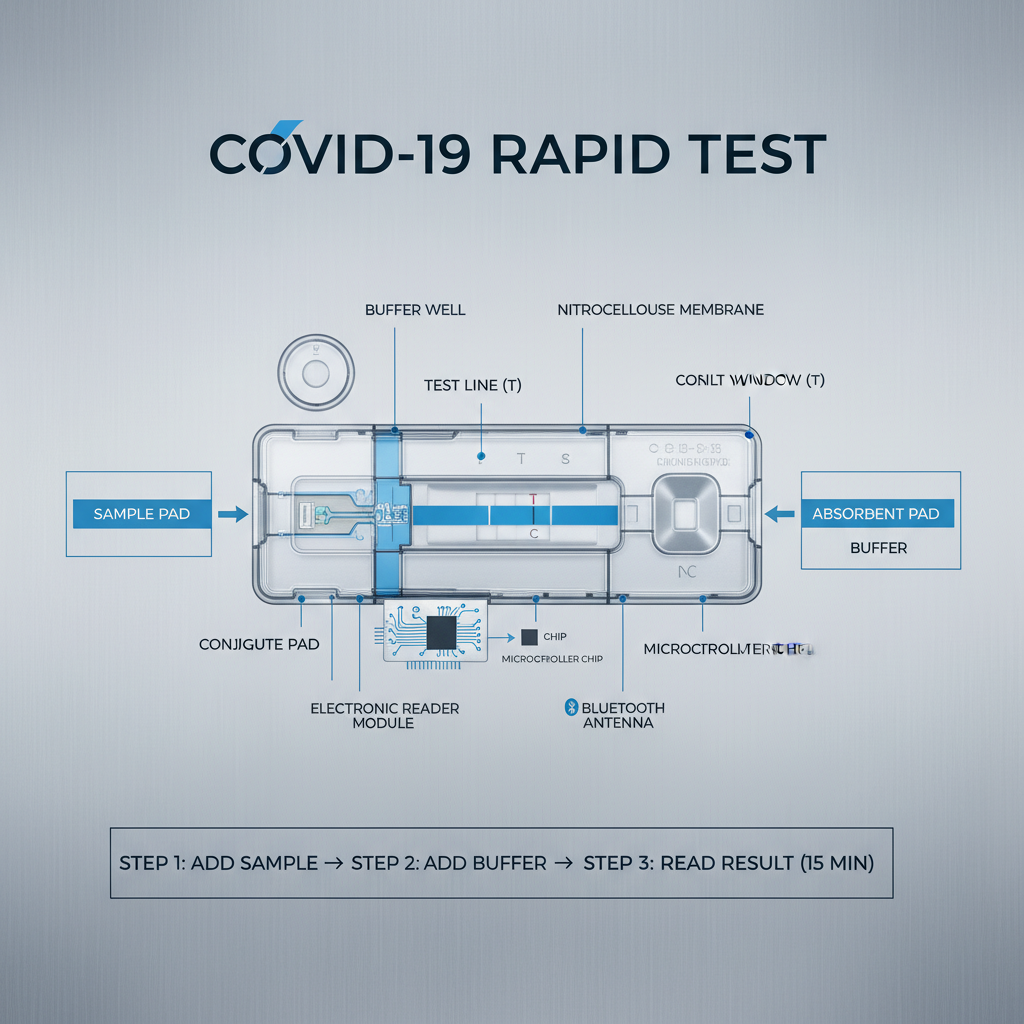
A covid-19 antigen rapid test is a diagnostic test designed to detect specific proteins (antigens) from the SARS-CoV-2 virus, which causes COVID-19. Unlike PCR tests that amplify viral RNA, antigen tests identify the presence of the virus directly. This fundamental difference results in faster turnaround times, typically within 15-30 minutes.
The principle behind antigen tests involves using antibodies that specifically bind to the SARS-CoV-2 antigens. This binding triggers a visual signal, such as a colored line appearing on a test strip, indicating a positive result. The simplicity of this process makes it suitable for point-of-care testing, requiring minimal training and equipment.
This technology isn’t limited to the current pandemic; the development of rapid antigen tests for COVID-19 builds upon decades of research and application in other infectious disease diagnostics, like influenza and strep throat. Its connection to modern industry lies in the advancements in biotechnology and materials science that enabled the creation of sensitive and reliable rapid test platforms.
Key Factors Influencing Rapid Test Performance
Several key factors influence the accuracy and reliability of a covid-19 antigen rapid test. These include test sensitivity, specificity, and the timing of sample collection relative to the onset of infection. Understanding these factors is critical for interpreting results correctly and making informed decisions.
Proper sample collection is also paramount. Most tests require a nasal swab, and the technique used to collect the sample can significantly impact accuracy. Following the manufacturer’s instructions carefully, including swabbing depth and rotation, is essential for obtaining a representative sample.
Comparison of covid-19 antigen rapid test Methods
Global Applications and Use Cases
covid-19 antigen rapid test are utilized in a wide array of settings globally. In healthcare facilities, they serve as a first-line screening tool for patients presenting with COVID-19 symptoms, aiding in rapid triage and isolation. They are also integral in mass testing initiatives, such as those conducted at airports, schools, and workplaces.
In post-disaster relief operations, where access to traditional laboratories is limited, these tests are invaluable for quickly identifying and containing outbreaks. Remote industrial zones and field research locations also benefit from their portability and ease of use. Furthermore, these tests are being increasingly adopted for self-testing at home, empowering individuals to take control of their health and limit community spread.
Advantages and Long-Term Value
The key advantages of covid-19 antigen rapid test lie in their speed, cost-effectiveness, and accessibility. Compared to PCR tests, they offer significantly faster results, enabling quicker decision-making regarding isolation and treatment. Lower manufacturing costs make them more affordable, particularly for large-scale testing programs.
Beyond immediate pandemic response, these tests contribute to a more resilient public health infrastructure. They enhance our ability to detect and respond to future outbreaks, protect vulnerable populations, and minimize economic disruptions. The emotional value of providing individuals with rapid and reliable health information is also substantial, fostering trust and empowering proactive health management.
Future Trends and Innovations
The future of covid-19 antigen rapid test is poised for further innovation. Ongoing research focuses on improving test sensitivity and specificity through advancements in antibody engineering and signal amplification technologies. Multiplex tests, capable of detecting multiple respiratory pathogens simultaneously, are also under development.
Digital integration, such as smartphone-based test readers and data reporting platforms, will streamline testing processes and enhance data analysis. Furthermore, advancements in materials science are driving the development of more stable and user-friendly test formats. Sustainability considerations are also gaining prominence, with efforts to reduce plastic waste and develop eco-friendly test components.
The convergence of these trends promises to deliver even more powerful and versatile diagnostic tools for managing infectious diseases, contributing to a healthier and more prepared global community.
Challenges and Solutions
Despite their benefits, covid-19 antigen rapid test are not without limitations. False negative results, particularly in individuals with low viral loads or during the early stages of infection, remain a concern. Variations in test performance across different manufacturers and the potential for user error also pose challenges.
To address these issues, improved quality control measures and standardized testing protocols are crucial. Training programs for healthcare professionals and the public can enhance proper sample collection techniques and result interpretation. Furthermore, research efforts focused on developing more sensitive and specific antigen detection methods will continue to improve test accuracy.
Combining antigen testing with other diagnostic approaches, such as PCR testing for confirmatory results, can also mitigate the risk of false negatives. Ongoing monitoring of viral variants and their impact on test performance is essential for maintaining effective surveillance and response strategies.
Summary of covid-19 antigen rapid test challenges and solutions
| Challenge |
Impact |
Proposed Solution |
Implementation Cost (1-10) |
| False Negative Results |
Missed infections, continued spread |
Confirmation with PCR testing |
7 |
| User Error in Sample Collection |
Inaccurate results |
Comprehensive training programs |
5 |
| Varied Test Performance |
Inconsistent reliability |
Standardized quality control |
8 |
| Emerging Viral Variants |
Reduced test sensitivity |
Regular test performance monitoring |
6 |
| Supply Chain Disruptions |
Limited test availability |
Diversification of manufacturers |
4 |
| Data Management & Reporting |
Inefficient surveillance |
Digital integration of testing data |
9 |
FAQS
While PCR tests are considered the "gold standard" for COVID-19 detection, covid-19 antigen rapid test offer a trade-off between speed and accuracy. Antigen tests generally have lower sensitivity, meaning they may miss some cases, particularly those with low viral loads. However, they are highly specific, meaning they are less likely to produce false positive results. The accuracy varies between manufacturers and depends on factors like proper sample collection and the timing of testing.
The optimal time to take a covid-19 antigen rapid test is typically within the first 5-7 days of symptom onset, as this is when viral loads are usually highest. Testing too early or too late in the course of infection may increase the risk of a false negative result. If you are asymptomatic but have been exposed to someone with COVID-19, testing several days after exposure is recommended.
Yes, covid-19 antigen rapid test can be used by vaccinated individuals. While vaccination significantly reduces the risk of infection and severe illness, it does not eliminate it entirely. Testing can help identify breakthrough infections and prevent further spread, particularly in situations where exposure risk is high.
If you receive a positive result on a covid-19 antigen rapid test, it is crucial to isolate yourself immediately and follow public health guidelines. Contact your healthcare provider for further guidance and consider confirming the result with a PCR test. Notify your close contacts so they can monitor for symptoms and get tested if necessary.
The effectiveness of covid-19 antigen rapid test against new variants can vary. Manufacturers continuously monitor test performance against emerging variants and update their tests as needed. While some variants may exhibit reduced sensitivity, most tests remain reliable for detecting infection. It's essential to use tests approved by regulatory authorities and stay informed about the latest recommendations.
Proper storage of covid-19 antigen rapid test is essential for maintaining their accuracy. Store the tests in a cool, dry place, away from direct sunlight and extreme temperatures. Always check the expiration date before use. Following the manufacturer’s storage instructions ensures the test reagents remain stable and deliver reliable results.
Conclusion
The covid-19 antigen rapid test has demonstrably transformed our approach to infectious disease management. Its speed, accessibility, and affordability have made it an indispensable tool in controlling outbreaks, protecting vulnerable populations, and facilitating a return to normalcy. Understanding its strengths and limitations is key to effective implementation and interpretation of results.
Looking ahead, continued innovation in test technology, coupled with robust surveillance systems and public health infrastructure, will be crucial for addressing future health challenges. By embracing these advancements and prioritizing equitable access to diagnostic tools, we can build a more resilient and prepared global community. Visit our website at www.prisesbio.com to learn more about our products and services.